



AI vs. Traditional Cybersecurity: A Critical Analysis of Ransomware Mitigation
Ransomware remains a pervasive and escalating threat to organizations across all sectors. Its capacity to encrypt critical data and extort payments has driven an urgent demand for more robust and adaptive cybersecurity defenses. This analysis critically compares two primary approaches to combating ransomware: traditional, signature-based cybersecurity solutions and advanced AI-driven systems, evaluating their efficacy in detection, response, and prevention.
Quick Overview
Feature Comparison
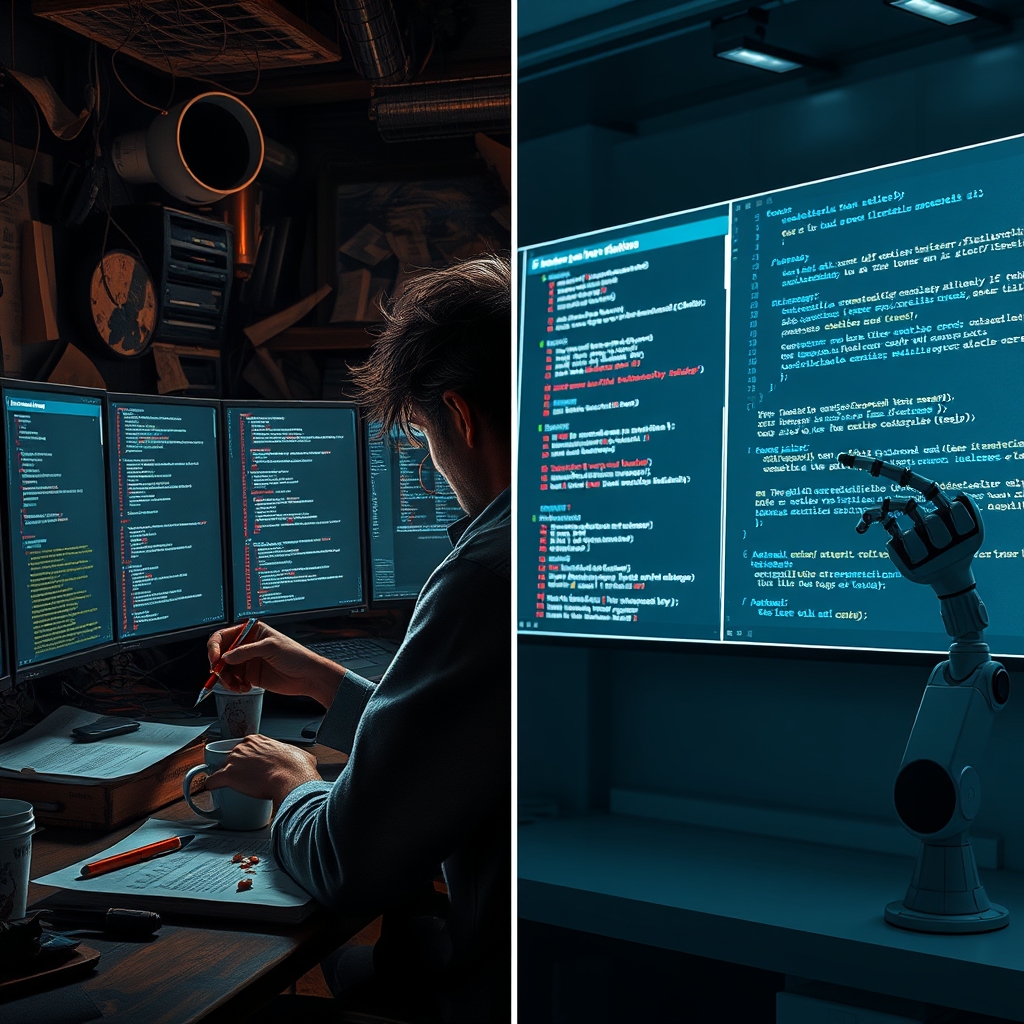
Traditional cybersecurity relies heavily on static rules, known signatures, and predefined policies. This includes antivirus software, firewalls, and intrusion detection systems that operate on a ‘known bad’ principle. While effective against previously identified threats, their agility against novel or polymorphic ransomware variants is inherently limited. Detection often occurs post-infection, relying on updated threat intelligence feeds.
AI-driven cybersecurity solutions leverage machine learning (ML) and deep learning (DL) algorithms to analyze vast datasets, identify anomalies, and predict potential threats. These systems move beyond signatures, focusing on behavioral analysis, process monitoring, and network traffic patterns. They can detect never-before-seen ransomware strains by identifying unusual file access, encryption attempts, or communication patterns, offering a proactive defense.
Pricing Comparison
Traditional solutions often present a lower initial investment, with costs typically tied to licenses and hardware. However, their total cost of ownership (TCO) can escalate due to the extensive human resources required for manual monitoring, incident response, and continuous rule updates. A successful ransomware attack, which traditional systems are more susceptible to, carries immense financial and reputational costs.
AI-driven platforms generally entail a higher upfront investment and often operate on subscription models due to the computational resources and specialized expertise required. However, they promise reduced operational overhead through automation, fewer successful breaches, and faster recovery times. The long-term TCO can be significantly lower due to superior prevention and mitigation capabilities, offsetting the initial cost with reduced risk and operational efficiency.
Ease of Use
Managing traditional cybersecurity systems often demands significant expertise in network architecture, security policies, and threat intelligence. Configuration of firewalls, SIEM rules, and endpoint protection requires hands-on involvement and continuous tuning. This complexity can lead to misconfigurations and security gaps.
AI-driven solutions aim to simplify security operations through automation and intelligent insights. While initial setup and model training may require specialized knowledge, daily operations often involve intuitive dashboards, automated alerts, and self-optimizing algorithms. They reduce the burden on security analysts by prioritizing genuine threats and automating routine tasks, though expert oversight remains crucial for fine-tuning and complex incident handling.
Performance
Traditional systems excel at quickly identifying and blocking known ransomware threats through signature matching. Their performance degrades significantly when confronted with zero-day exploits, polymorphic variants, or fileless attacks that bypass signature databases. False positives can be high if rules are too broad, while false negatives can occur if rules are too specific or outdated.
AI-driven solutions demonstrate superior performance in detecting sophisticated and evolving ransomware. By analyzing behavioral anomalies, AI can identify malicious activity even without a known signature. Their real-time analytical capabilities enable faster detection and response, often pre-execution. Advanced models, such as those used in endpoint detection and response (EDR) and extended detection and response (XDR) platforms, can achieve lower false positive rates and significantly higher detection rates for novel threats.
Best Use Cases
Traditional cybersecurity solutions are best suited for smaller organizations with limited budgets, less complex IT environments, and those primarily concerned with compliance against known threats. They can serve as a foundational layer, particularly when augmented by robust backup and recovery strategies.
AI-driven cybersecurity is indispensable for enterprises, critical infrastructure, and any organization facing a high volume of sophisticated and evolving threats. Organizations with large, dynamic networks, sensitive data, or a need for proactive defense, rapid incident response, and reduced operational overhead will find AI solutions invaluable. They are particularly effective in environments where zero-day ransomware and advanced persistent threats (APTs) are a significant concern.
Comparison Summary
In the fight against ransomware, the distinction between traditional and AI-driven cybersecurity is stark across key operational domains:
- Detection Methods: Traditional methods rely on static signatures and rules, reacting to known threats. AI-driven systems employ behavioral analytics and machine learning to proactively identify anomalous activities indicative of novel or polymorphic ransomware, often pre-execution.
- Response Strategies: Traditional responses are typically manual and reactive, involving human-led isolation and remediation. AI-driven solutions facilitate automated containment, rapid threat neutralization, and guided incident response, significantly reducing dwell time and potential damage.
- Prevention Techniques: Traditional prevention focuses on perimeter defense and blocking known malicious files. AI-driven prevention extends to predictive threat intelligence, identifying potential vulnerabilities, and adapting defenses in real-time based on evolving threat landscapes. Recent advancements in AI, such as federated learning for threat intelligence sharing and explainable AI (XAI) for threat analysis, further enhance these capabilities.
For organizations prioritizing cost efficiency over comprehensive, adaptive protection against the most advanced threats, a robust traditional setup might suffice as a baseline. However, for those grappling with the escalating sophistication of ransomware, where zero-day attacks and polymorphic variants are a constant threat, AI-driven cybersecurity solutions offer an unparalleled advantage. They provide the necessary agility, speed, and proactive intelligence to defend against evolving attacks, minimizing both the likelihood and impact of a successful breach. The most resilient defense often involves a hybrid strategy, leveraging the foundational strengths of traditional security while integrating the advanced, adaptive capabilities of AI to create a layered, intelligent defense.